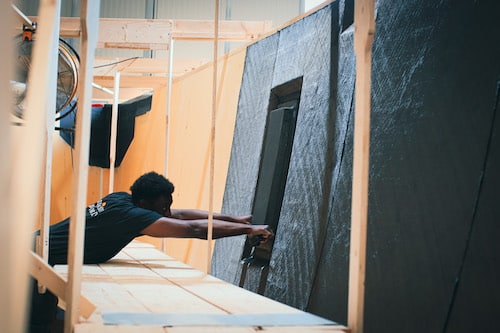
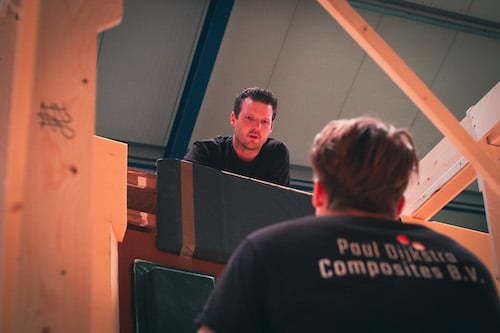
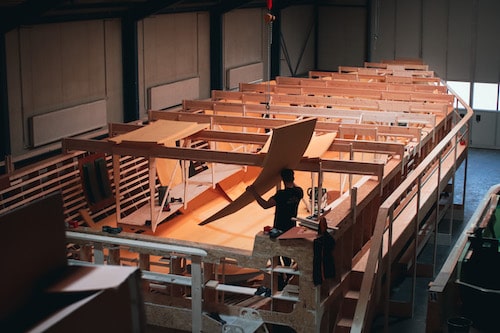
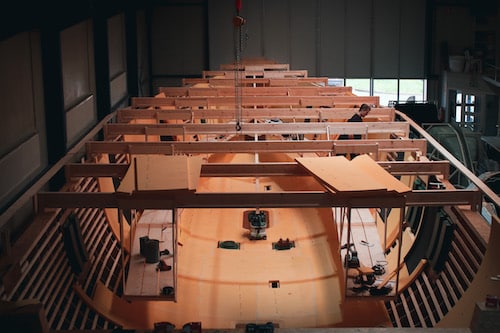
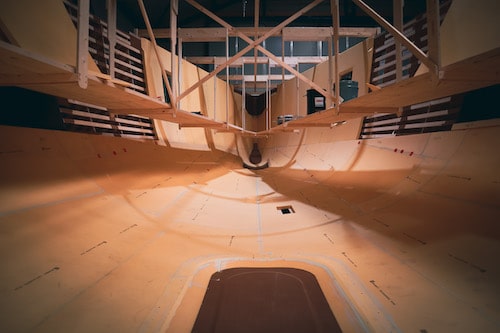
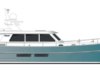
At Paul Dijkstra Composites in Uitwellingerga/Netherlands, they are currently working at their latest project: a unique 71ft carbon sailing yacht designed by Tripp Design. This innovative vessel is set to operate entirely without fossil fuels, demonstrating the potential of new technologies in the marine industry.

From lightweight construction techniques to state-of-the-art electric drives, batteries, and solar panels, every element is designed for sustainability and efficiency. We are currently focused on constructing the hull. Once the hull is completed, KM Yachtbuilders in Makkum will finalize the build for its owner. This is just the beginning!
Join us for Part 1 of a video series from Paul Dijkstra Composites, where we explore the details of the ‘Inner Hull.’ Stay tuned for more updates on this unique project leading up to its delivery!
In the first part of the video series, Paul Dijkstra shows the details of the inside of the hull.
Adaptive mould
In this video, Paul Dijkstra talks about the new construction method he has developed with his yard. We wrote about this earlier in Jachtbouw Nederland. Then it was about the construction of Leonardo Yachts’ new Hoek Design Eagle 46, but without a traditional mould. Instead, the Frisian yard used the Core kit of Curve Works from Alphen aan den Rijn, where they work with an ‘adapted’ mould. This is a special table that can take (almost) any shape and on which pre-formed plates are made. This gave Paul Dijkstra the idea of ordering a ‘Core Kit’ for the Eagle 46. Dijkstra: ‘In this case, we chose Corecell plates, which are “closed cell”. We place these pre-formed plates in a construction frame, after which we glue them together. Then we laminate the inner skin and place the bulkheads and stiffeners. Only then the hull will be turned over. This way, we can still build the whole boat with vacuum and this construction method does not compromise quality.’ This method has now been applied to Paul Dijkstra Composites’ latest project; the 71ft carbon sailing yacht, making it possible to use an extra-thick foam core. Paul Dijkstra explains it all in the video above.