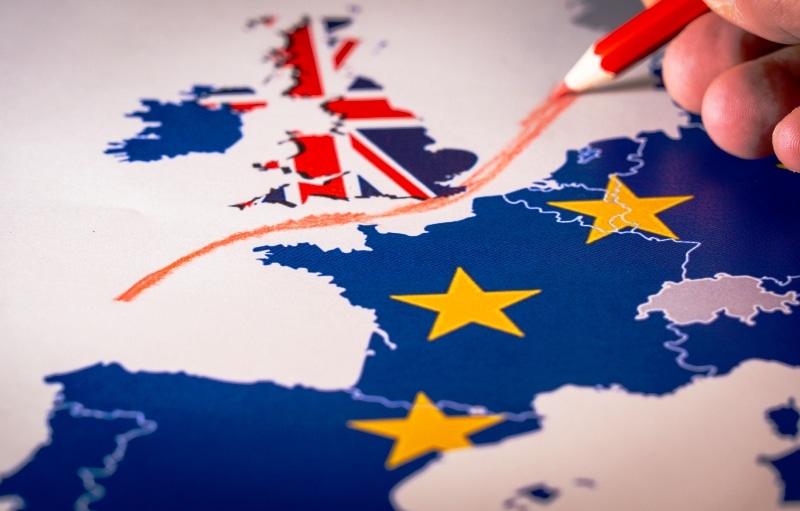
AMSTERDAM – Britons voted in 2016 to quit the EU. Thanks to a lax, first-year transition period in 2021, its impact on Dutch yacht builders has been tentative but tougher times lie ahead.

Saffier Yachts builds more than 100 high-end daysailers a year and sells them worldwide. Due to Brexit, “we deal with some red tape now,” says Saffier Yachts co-owner Dennis Hennevanger. Such as customs declarations, a VAT certificate or an (air) waybill.

No VAT is charged on sales to non-EU nations. But VAT applies to sales of used boats. “If you sell a used boat to the UK, the VAT has already been paid, but British buyers will have to pay it again,” says Hennevanger. “The Swiss are not in the EU, but they charge only a 7.8% VAT rate. In Britain, it can go as high as 21%.
Jan-Pieter Botman’s company, More Marine, imports Spinlock and English Braids ropes and cords. It was tough going in the first few months of 2021 but “mainly because of slow supplies and customs red tape,” says Botman.
“That improved, though,” he adds. “The customs office had to get used to product origin and coding issues. In the beginning, we saw a lot of faulty import duties.”
 But at the outset of 2022, miles of trucks formed on roadways on both sides of the English Channel, for days, as new customs rules took effect. In 2021, Britain’s first year outside the EU, exporters had 60 days to complete customs papers after exporting their goods. As of 2022, that grace period has disappeared, creating miles of truck lines on both sides of the Channel. They stretched to 6 miles (10 kms) outside Dover and even longer outside Calais, France.
Has Brexit raised prices?
Botman: “That depends on where the product was made, inside or outside the UK. If UK products are made outside Britain, import duties must be paid. If the Brits get goods from, say, the Philippines, they pay import duties. And if they then sell them to us, there’s another charge of import duties. The Brits have lost their ‘hub’ role. There’s no more point in sending stuff from outside the EU to the UK and from there distribute it within the EU.”
Dutch deck maker Statement Marine does a fair amount of business with Britain. Sales Manager Harm van Tienen: “We now need more export-import documents. The preparatory work is tedious.”
CE-marked goods are still accepted in Britain. Starting in 2023, they must carry the UK Conformity Assessed mark (UKCA). Yet Saffier Yachts’ Hennevanger believes Britain will continue to accept the CE-marking. He also questions if Britain will drop the metric system in favor of pounds and ounces. “The Swiss accept the CE marking, and I think Britain will follow suit. I doubt Spinlock will suddenly replace millimeters with inches. Europe is their biggest market!”
Hennevanger adds he has noticed that British customs and other agencies are sometimes unclear about the post-Brexit rules. Van Tienen concurs: “For transporters, clearing customs can be a pain. There are delays in transit.”